 admin
admin US President Donald Trump has returned to his familiar pattern in trade policy: unpredictable, inconsistent, and sometimes contradictory. One moment, he is calling for punitive measures against India and China; the next, he dangles the possibility of negotiations and deals with Indian leadership. This “hot-and-cold” approach has serious implications for Indian trade, particularly the risk of falling into what some economists call MASALA deals — flashy, temporary agreements that offer short-term relief but little long-term stability.
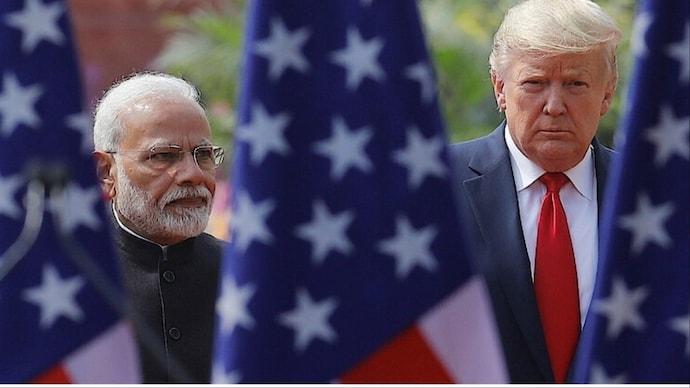
The Tariff Back-and-Forth
India has already felt the effects of Trump’s erratic trade policy. Earlier, the United States doubled tariffs on Indian imports to 50%, primarily targeting goods tied to discounted oil trade with Russia. Now, Trump is reportedly urging the European Union to impose 100% tariffs on Indian and Chinese goods as a way to punish Moscow. At the same time, he signals a willingness to continue negotiations with Prime Minister Narendra Modi, suggesting a cooperative approach.
For Indian exporters, this back-and-forth is disorienting. Tariff hikes one day, negotiations the next — it’s impossible to plan long-term strategies when policies can change overnight.
Dr. Manoranjan Sharma, Chief Economist at Infomerics Ratings, explains the risk clearly: “Donald Trump’s contradictory signals complicate the prospect of a straightforward US-India trade negotiation. While he hints at willingness to engage New Delhi, his calls for the EU to impose 100% tariffs and his own proposal to double tariffs on Indian imports undercut credibility and trust.”
What Are MASALA Deals?
Sharma coins the term MASALA deals — Mutually Agreed Settlements Achieved through Leveraged Arm-twisting. The acronym highlights how these deals can feel appealing but are often short-term, cosmetic solutions rather than meaningful agreements.
Think of it this way: a MASALA deal is like a spicy dish that looks exciting on the surface but lacks lasting substance. It may offer temporary relief or a photo opportunity, but exporters and industries remain vulnerable to the next sudden shift in Washington’s policy.
In the context of US-India trade, a MASALA deal could mean agreeing to minor concessions or symbolic gestures in return for a promise of tariff relief — only for that relief to be revoked if the political mood in the US changes.
Sharma warns: “The priority is to secure clarity on market access in critical sectors such as textiles, gems and jewellery, pharmaceuticals, and automotives while avoiding MASALA deals. With tariff hikes already weighing on exports and GDP projections, India seeks strategic relief and predictability, not short-term concessions.”
licomplores.net | Lifeshayariread.com | Thestylemyhair.com
Loveshayaripath.com | Cricketteamscorecard.com
The Real Stakes for India
India’s economy cannot afford to be reactive to the whims of a single leader. Trade negotiations are not just about securing a few percent tariff reduction; they are about durable arrangements, predictable rules, and enforceable mechanisms. Without these, every concession could be undone by a sudden tweet or policy announcement.
Trump’s hot-and-cold style threatens:
-
Export stability – Sudden tariff hikes or threats disrupt production schedules and contracts.
-
GDP growth – Indian industries heavily reliant on US markets face uncertainty, which can slow growth.
-
Investor confidence – Volatile trade relations discourage foreign investment and long-term partnerships.
Sharma adds that India has an opportunity amid this chaos. Instead of reacting to every new signal, Indian negotiators can push for durable trade arrangements, phased tariff rollbacks, and robust dispute-resolution mechanisms. This approach helps reduce vulnerability to US policy swings while securing long-term access to critical markets.
Addressing Non-Tariff Barriers
Trade challenges go beyond tariffs. Non-tariff measures (NTMs) often affect exporters more than headline duties. India faces issues such as:
-
Customs valuation rules – Complex valuation practices can increase costs unexpectedly.
-
Import licensing – Lengthy or opaque processes can delay shipments.
-
Pre-shipment inspections – Red tape can slow down exports.
-
Rules of origin – Ambiguous requirements may disqualify goods from preferential treatment.
-
Trade-related investment measures – Restrictions on investments can impact competitiveness.
India must tackle these NTMs as part of a broader trade strategy. A MASALA deal might temporarily ease tariffs but will not solve these deeper, structural issues.
Leveraging Trade Negotiations Strategically
Despite Trump’s unpredictability, India can turn the situation into a strategic advantage:
-
Negotiate Durable Deals – Focus on agreements that are legally enforceable and offer long-term market access.
-
Phased Tariff Reductions – Instead of ad hoc concessions, secure structured reductions with timelines.
-
Dispute Resolution Mechanisms – Ensure any agreement includes clear procedures for addressing disagreements.
-
Sector-Specific Clarity – Prioritize sectors where India has comparative advantage, such as textiles, pharmaceuticals, IT services, and automotive exports.
-
Innovation and Resilience – Diversify markets and strengthen domestic competitiveness to reduce reliance on a single economy.
Sharma emphasizes, “Building on the ‘Mission 500’ vision of doubling bilateral trade to $500 billion by 2030, India must combine resilience with innovation, new strategies for new realities.”
The Bigger Picture
The Trump administration’s unpredictable trade signals highlight the need for strategic patience. India must resist short-term temptations and focus on policies that guarantee long-term stability. While photo-ops and headlines may look appealing, MASALA deals can ultimately be more harmful than helpful.
By focusing on transparency, clarity, and enforceable agreements, India can:
-
Strengthen its negotiating position.
-
Protect its exporters from sudden shocks.
-
Build trust with global trading partners.
-
Ensure sustainable growth and long-term access to critical markets.
Conclusion
Donald Trump’s hot-and-cold tariff game is not new, but India must respond with calm, strategy, and foresight. MASALA deals may seem tempting in the short term, offering quick relief or a media-friendly handshake, but they lack durability and leave exporters exposed to the next policy swing.
India’s priority should be long-term trade stability, market access, and predictable rules, not temporary fixes. By doing so, it can protect its economy, safeguard export industries, and ensure that bilateral trade with the US grows sustainably, supporting goals such as Mission 500 and wider economic development.
In a world of unpredictable leaders and shifting global politics, India’s strength lies in resilience, strategic planning, and patience — qualities that ensure it will not be swept off course by the latest tariff headline.
