 admin
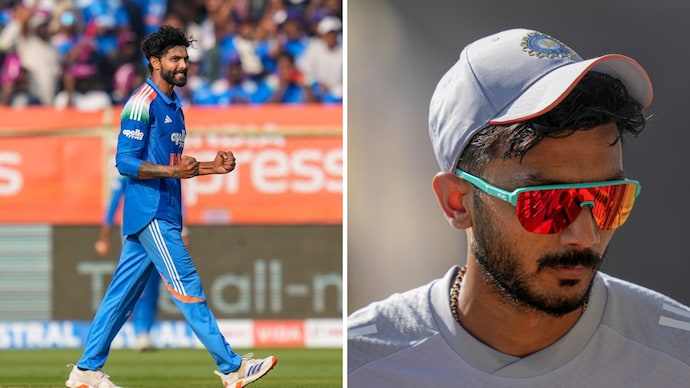
admin Cricket is a game driven as much by numbers and performance trends as it is by passion and history. Few players embody that blend more than Ravindra Jadeja, the left‑arm spin all‑rounder who has been one of India’s most valuable limited‑overs cricketers for well over a decade. Yet, in early 2026, Jadeja finds himself under intense scrutiny as India’s ODI setup recalibrates, and Axar Patel, another left‑arm spin all‑rounder, emerges as a compelling alternative. The recent second ODI against New Zealand has amplified this conversation, signaling that the clock may be running out on Jadeja’s ODI career.
1. The Second ODI: A Watershed Moment
In the second ODI of the India vs New Zealand series, India suffered a seven‑wicket defeat, allowing New Zealand to level the three‑match series. New Zealand’s chase was anchored by a commanding century from Daryl Mitchell, supported by a high‑impact partnership that blunted India’s bowling attack. Despite a competitive total posted by India, it was an inability to consistently take wickets in the middle overs that tilted the game in New Zealand’s favor. Critics have pointed specifically to the performance of India’s senior players in that defeat, with particular focus on Jadeja’s contributions, or lack thereof.
This defeat did not just represent a loss in a bilateral series; it triggered broader questions about team balance and individual roles in the present ODI framework.
2. Jadeja’s Recent Struggles: Bat and Ball
Jadeja entered the second ODI in a familiar but challenging position—India were four wickets down, requiring momentum and acceleration in the later stages. His response, however, fell short of expectations. Battling for timing and tempo, Jadeja scored 27 off 44 deliveries, a strike rate significantly below what many analysts consider effective for a number seven in modern ODI cricket. This innings did little to shift momentum and was a reflection of broader batting struggles that have dogged him in recent 50‑over games.
With the ball, Jadeja’s recent numbers paint an equally concerning picture. Across his last five ODIs, he has managed only a single wicket, while conceding runs at an economy that suggests a reduced wicket‑taking threat. In the Rajkot ODI specifically, he went wicketless and finished with figures that lacked penetration against an opposition batting lineup scoring freely.
Combined, these performances hint at a worrying trend: a once indispensable all‑rounder no longer delivering consistent impact in the 50‑over format.
3. The Axar Factor: Ready and Waiting
As Jadeja’s on‑field returns have dipped, Axar Patel’s reputation as a reliable limited‑overs all‑rounder has strengthened. Although Axar was not part of the playing XI in this particular New Zealand match, his recent performances for India, including match‑influential contributions in major ICC tournaments, have heightened calls for his inclusion.
Analysts have repeatedly noted that Axar offers a blend of batting assertiveness and bowling control that complements India’s current ODI strategy. In the T20 World Cup 2024, for example, Axar claimed nine wickets while Jadeja managed just one—an eye‑catching contrast that illustrates their divergent forms in recent high‑pressure games. Moreover, Axar’s ability to rotate strike effectively with the bat and provide crucial runs lower down the order has been pointed out as a tactical asset in ODI cricket.
While Axar’s exclusion from the second ODI raised eyebrows among some experts and former players, the underlying message is clear: selectors have another capable all‑round option to lean on if Jadeja cannot rediscover his best form.
linkerchains.com | urcaddystudios.com | busrena.com
GrammarWays.com | ACourierTracking.com
4. Pressure from Pundits and Former Players
Public discourse around Jadeja’s ODI future isn’t confined to scorecards and fan chatter; respected voices in the cricketing community have weighed in. Former Indian captain Kris Srikkanth, for example, criticized the team’s reluctance to bring Axar back into the XI and highlighted how Jadeja’s current uncertainties make India’s bowling depth less robust. Others have echoed similar sentiments, pointing to Jadeja’s recent ODI batting statistics—particularly his difficulty in scoring quickly or building innings—as a reason why selectors might consider fresh alternatives.
Irfan Pathan, another notable voice, dissected Jadeja’s recent Rajkot performance and highlighted how a strike rate closer to 80 would have significantly helped India’s cause, labeling the actual output well below the standard expected of someone in Jadeja’s role. Pathan also underscored Jadeja’s limited wicket‑taking contributions with the ball, reinforcing the point that sustained underperformance in both disciplines amplifies pressure on a senior player.
This sort of constructive critique from experienced professionals adds another dimension to the debate: it’s not solely about one bad match, but a pattern that requires careful evaluation.
5. Balancing Legacy and Current Form
One of the hardest tasks for any cricket board is balancing respect for a player’s legacy with the present realities of team performance. Jadeja’s contributions to Indian cricket across formats are immense—his energy in the field, sharp spin bowling, and clutch batting have delivered match‑winning moments for years. He played a significant role in India’s successful ICC campaigns, including the Champions Trophy victory over New Zealand, contributing key performances across both batting and bowling.
Yet, cricket is a results‑oriented sport, and selection is ultimately defined by current capability and team needs. With 2027 ODI World Cup ambitions already in view, India’s management has to make decisions that optimize the team’s chances on pitches around the world. If veteran players are unable to consistently meet performance benchmarks, tough choices become inevitable.
Jadeja’s situation exemplifies this dilemma. His experience and past success grant him time and respect, but not immunity from the demands of form and fitness.
6. What Happens Next? The Third ODI and Beyond
The third and final match of the India vs New Zealand ODI series now carries extra weight. For Jadeja, it represents an opportunity to silence critics and reaffirm his value to the ODI side. For selectors, it is a chance to assess whether his form is improving or faltering further—information that will be critical ahead of larger tournaments.
Should Jadeja deliver strong all‑around contributions, the debate over his spot may cool. Conversely, another subdued performance could accelerate calls for Axar’s inclusion—and the broader transition to a younger, more in‑form all‑round unit.
Looking further ahead to the 2027 ODI World Cup, India will likely need clarity on its spin‑all‑rounder structures. Whether that clarity includes Jadeja or favors Axar hinges on performances in the immediate future.
Conclusion: A Defining Crossroads
Ravindra Jadeja’s career has been distinguished and impactful, but the second ODI loss to New Zealand has intensified scrutiny on his 50‑over prospects. With performances below expectations and a strong contender ready in the wings, Jadeja’s ODI future stands at a crossroads. The cricketing world will be watching closely as the next matches unfold—because in professional sport, even legends must prove their value game by game.
