 admin
admin Greenland, the world’s largest island, has long attracted global attention because of its strategic location, natural resources, and political importance. Though covered mostly in ice, it plays a central role in Arctic geopolitics. The idea of the United States buying Greenland may sound unusual today, but it is not new. In 1946, the US formally offered Denmark 100 million dollars in gold to purchase the island. Denmark declined, and the proposal quietly faded into history. Yet decades later, the same question continues to resurface: can Greenland truly be priced and purchased?
To understand why this question remains relevant, it is important to explore Greenland’s history, political status, strategic value, and the realities of modern international law.
Why Greenland Matters
Greenland sits between North America and Europe, making it one of the most strategically positioned territories in the world. Its location allows military and communication access across the Arctic, North Atlantic, and North American regions. During World War II, Greenland became vital for weather monitoring and aircraft refueling. The United States established military bases there to prevent German influence after Denmark was occupied by Nazi forces.
After the war, the strategic importance of Greenland increased even further with the rise of Cold War tensions. The island provided an early warning system against potential missile threats from the Soviet Union. Even today, US military installations in Greenland continue to play a crucial role in global defense systems.
Beyond security, Greenland also holds vast mineral resources, including rare earth elements, uranium, and other valuable materials that are essential for modern technology. As Arctic ice continues to melt due to climate change, access to these resources becomes easier, increasing Greenland’s economic and geopolitical importance.
The 1946 Purchase Offer
In 1946, the United States government proposed buying Greenland from Denmark for 100 million dollars in gold. The offer was based on strategic necessity rather than economic development. American officials believed owning Greenland would strengthen national security and secure Arctic dominance.
Denmark rejected the proposal politely but firmly. Danish leaders made it clear that Greenland was not for sale. At the time, Greenland was still a colony, but Denmark considered it an integral part of its kingdom. The rejection showed that political sovereignty could not be replaced by financial incentives.
This moment established an important precedent: Greenland was not a commercial asset, but a homeland with cultural, political, and national significance.
besttimefortravel.com | ykuft.com | coachoutletsb.com
allterrainoperations.com | ticketpang.org
Greenland’s Political Status Today
Today, Greenland is an autonomous territory within the Kingdom of Denmark. It governs most of its internal affairs through its own parliament and government. Denmark handles defense and foreign policy, but Greenland increasingly participates in international discussions about trade, environment, and development.
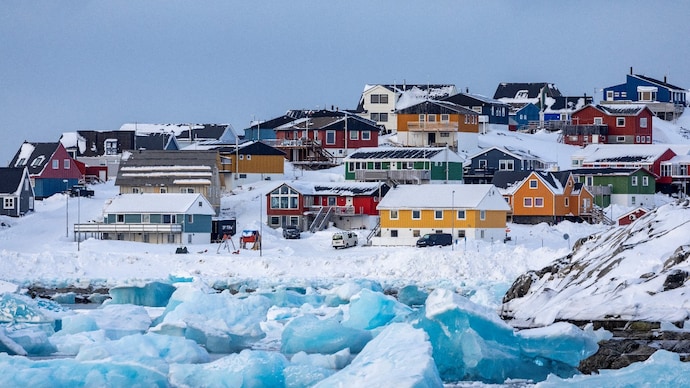
The people of Greenland, primarily Inuit, have a strong cultural identity and growing political awareness. Many support greater independence, and some advocate eventual full sovereignty. This means any discussion about selling Greenland ignores the most important voice — the Greenlandic population itself.
In modern international law, the right of people to decide their own political future is fundamental. No agreement between two governments could override the will of Greenland’s citizens.
Can Greenland Be Valued in Money?
Economists and policy experts agree that placing a monetary value on an entire territory is nearly impossible. Unlike land transactions between private owners, national territories include populations, political systems, ecosystems, cultural heritage, and strategic interests.
Even if Greenland’s resources were calculated in economic terms, that figure would not reflect its true value. National identity, environmental protection, indigenous rights, and long-term sustainability cannot be reduced to a financial number.
Some attempts to estimate Greenland’s value based on past offers suggest figures in the range of billions of dollars today. However, such calculations are symbolic rather than practical. They do not represent a realistic market price, because there is no legitimate market for selling nations or territories.
Renewed Interest in the 21st Century
In recent years, Greenland has returned to global headlines due to renewed US interest and increasing Arctic competition. Climate change has opened new shipping routes and exposed new mineral deposits. Countries such as China and Russia have expanded their Arctic activities, prompting the US to strengthen its regional presence.
Political discussions in the US have occasionally revived the idea of purchasing Greenland, but each time the response from Denmark and Greenland has been clear: Greenland is not for sale.
These episodes highlight that modern geopolitics is driven less by territorial purchases and more by cooperation, influence, investment, and diplomacy.
Ethical and Legal Barriers
Modern international law strongly protects territorial integrity and self-determination. The United Nations framework makes territorial sales between states extremely rare and politically sensitive. Even if Denmark were willing to consider such a proposal, Greenland’s consent would be legally and morally required.
Ethically, the idea of buying a homeland raises serious concerns. Greenland is not an empty land. It is home to communities with traditions, languages, and deep historical ties to the land. Treating it as a commodity contradicts modern values of human rights and democratic governance.
Lessons from History
Historical land purchases such as Alaska or Louisiana occurred in very different political eras. At that time, indigenous populations had little political power and international norms were weak. Today, such practices are widely viewed as outdated and unjust.
Greenland represents a shift from colonial thinking toward self-rule and political dignity. Any future decisions about Greenland’s status will be made by Greenlanders themselves, not by foreign financial offers.
The Real Question
The real issue is not whether the US can afford Greenland, but whether Greenland can be bought at all. In today’s world, the answer is clearly no. Greenland is not a product, not a property, and not a bargaining chip. It is a living society with its own aspirations and rights.
While the United States and Greenland continue to cooperate in defense, science, and economic development, their relationship is based on partnership, not ownership.
Conclusion
The 1946 offer to buy Greenland remains a fascinating chapter in diplomatic history. It reflects a time when strategic concerns dominated global politics. However, modern realities have transformed how nations view territory, sovereignty, and human rights.
Greenland’s value cannot be measured in dollars. Its importance lies in its people, culture, environment, and strategic role in shaping the future of the Arctic. The idea of putting a price tag on Greenland may generate headlines, but in practice, it belongs only to those who live there and shape its future.
