 Streamline
 For generations of Indian students, earning a seat at an Indian Institute of Technology (IIT) has symbolized academic excellence and a gateway to opportunity. Yet for many students living on campus today, a new challenge is emerging—one that has little to do with academics and everything to do with survival.
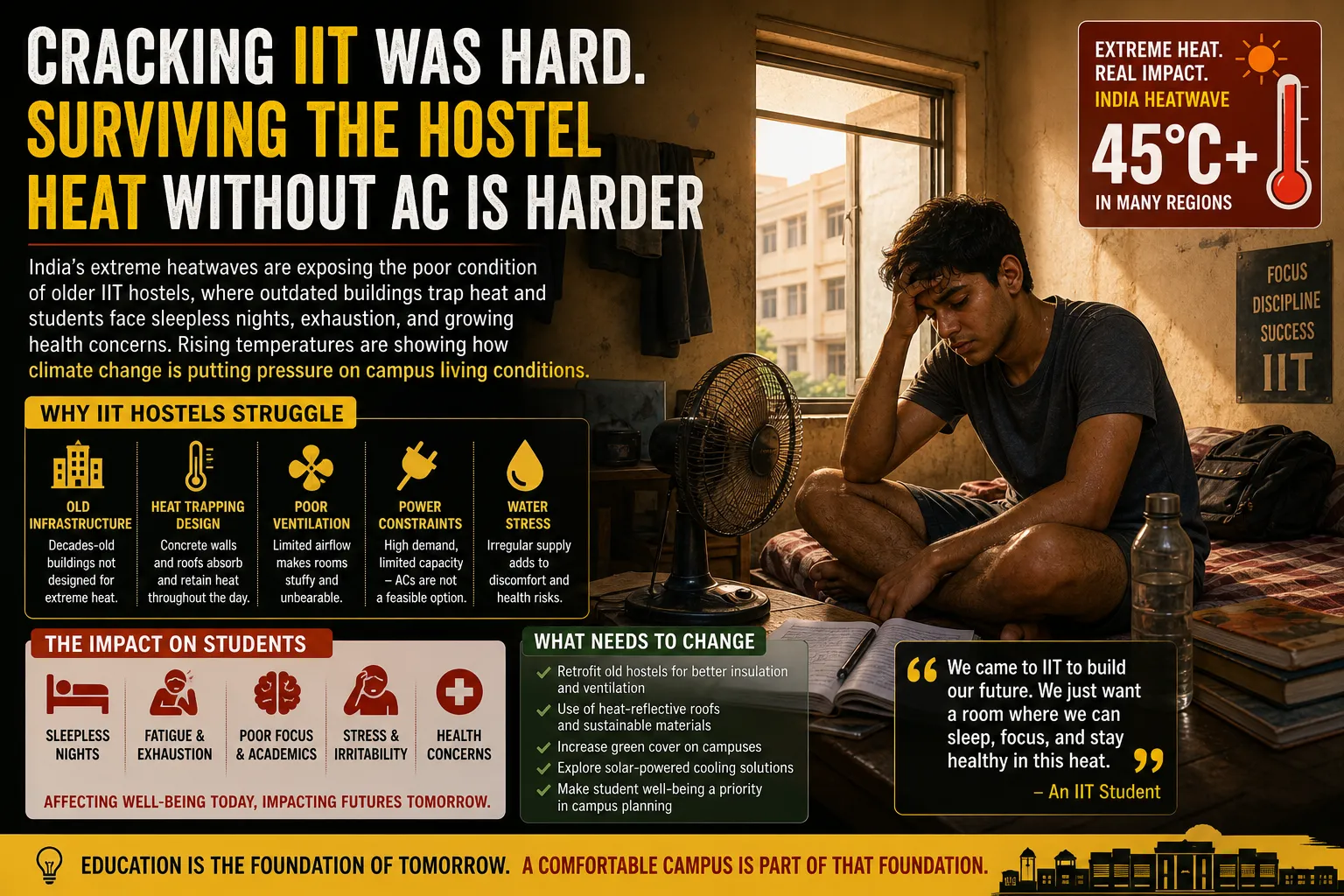
As India experiences increasingly intense and prolonged heatwaves, outdated hostel infrastructure at several IITs is struggling to cope, exposing students to extreme indoor temperatures, disrupted routines, and growing health concerns.
This situation highlights a broader issue: how climate change is beginning to directly affect educational environments, particularly in institutions with aging infrastructure.
The Rising Heat Reality
India has witnessed a steady increase in the frequency and intensity of heatwaves over recent years. Temperatures in several regions now regularly exceed 45°C during peak summer months. These extreme conditions are no longer isolated events but part of a broader climatic shift.
For students living in IIT hostels—many of which were built decades ago—this change is being felt acutely. Unlike modern residential buildings designed with climate-responsive features, older hostels often rely on basic construction methods that trap heat rather than dissipate it.
Rooms become unbearably hot during the day and retain that heat well into the night, creating a cycle of discomfort that leaves students with little relief.
The Design Problem: Heat-Trapping Structures
Many IIT hostels were constructed during a time when climate patterns were relatively stable and extreme heat events were less frequent. As a result, these buildings often lack:
-
Adequate insulation
-
Efficient ventilation systems
-
Heat-reflective materials
-
Modern cooling infrastructure
Concrete walls and flat roofs absorb and retain heat throughout the day. Narrow corridors and limited airflow further exacerbate the problem, turning rooms into confined heat pockets.
In the absence of air conditioning, students rely on ceiling fans, which provide minimal relief when ambient temperatures remain high. In some cases, even water supply systems struggle to keep up with demand, compounding the discomfort.
Sleepless Nights and Academic Impact
One of the most immediate consequences of extreme heat in hostels is the disruption of sleep. When indoor temperatures remain high at night, students find it difficult to rest adequately.
Sleep deprivation has a cascading effect:
-
Reduced concentration during lectures
-
Lower academic performance
-
Increased irritability and stress
-
Impaired cognitive function
For students at IITs, where academic pressure is already intense, the added burden of physical discomfort can significantly affect their overall well-being.
Many students report resorting to unconventional coping mechanisms, such as sleeping on floors, using wet towels, or staying in common areas late into the night in search of cooler spaces.
Health Risks in Extreme Conditions
Prolonged exposure to high temperatures is not just uncomfortable—it can be dangerous. Heat-related health risks include:
-
Dehydration
-
Heat exhaustion
-
Heatstroke
-
Headaches and fatigue
In crowded hostel environments, these risks can escalate quickly. Students who are not accustomed to such extreme conditions, particularly those from cooler regions, may be more vulnerable.
The situation also raises concerns about mental health. Continuous discomfort, lack of sleep, and physical stress can contribute to anxiety and burnout, affecting students’ ability to cope with academic demands.
Inequality Within Campuses
An important dimension of this issue is the disparity between older and newer infrastructure within the same institutions. While some recently built hostels incorporate better design and cooling systems, many older buildings remain unchanged.
This creates a situation where students living in different hostels experience vastly different living conditions. Such disparities can lead to frustration and a sense of inequity among students.
Additionally, access to personal cooling devices such as air coolers or portable AC units is often limited by hostel regulations, electricity constraints, or financial considerations.
Administrative Challenges and Constraints
Addressing the problem is not straightforward. IIT administrations face several challenges:
-
Retrofitting old buildings is expensive and time-consuming
-
Electricity infrastructure may not support large-scale air conditioning
-
Sustainability concerns around increased energy consumption
-
Balancing immediate relief with long-term planning
Despite these constraints, the urgency of the situation is becoming increasingly difficult to ignore. Some campuses have begun exploring solutions such as improved ventilation, installation of cool roofs, and phased infrastructure upgrades.
However, these measures often take time to implement, leaving students to cope with immediate challenges.
Climate Change and Campus Planning
The current situation underscores a critical gap in how educational institutions plan for the future. Climate change is no longer a distant concern—it is a present reality that must be integrated into infrastructure design and policy decisions.
Campus planning must evolve to include:
-
Climate-resilient architecture
-
Energy-efficient cooling solutions
-
Sustainable building materials
-
Green spaces that reduce heat impact
Incorporating these elements can help create environments that are not only comfortable but also environmentally responsible.
Student Voices and Growing Awareness
Students have increasingly begun to voice their concerns through formal channels and public discussions. Their experiences highlight the urgency of addressing heat-related challenges in hostels.
These voices are playing an important role in bringing attention to the issue, prompting discussions around policy changes and infrastructure investment.
At the same time, the situation is raising awareness about the broader implications of climate change. For many students, this is a firsthand experience of how environmental shifts can affect daily life.
The Need for Immediate and Long-Term Solutions
Addressing the heat crisis in IIT hostels requires a two-pronged approach:
Immediate Measures
-
Providing access to cooling devices where feasible
-
Ensuring adequate water supply and hydration facilities
-
Creating designated cooling zones within campuses
-
Adjusting academic schedules during peak heat periods
Long-Term Strategies
-
Retrofitting older hostels with modern insulation and ventilation
-
Investing in renewable energy to support sustainable cooling
-
Designing new buildings with climate resilience in mind
-
Developing policies that prioritize student well-being
Such measures require collaboration between administrators, policymakers, and experts in architecture and environmental science.
A Broader Reflection on Student Welfare
The challenges faced by IIT students are indicative of a larger issue affecting educational institutions across India. As temperatures rise, the need to prioritize student welfare becomes increasingly important.
Academic excellence cannot be separated from physical and mental well-being. Institutions must recognize that providing a conducive living environment is essential for enabling students to perform at their best.
Conclusion
Cracking the IIT entrance exam has long been considered one of the toughest achievements in India. Yet for many students today, the challenge does not end with admission. Surviving the intense heat inside aging hostels has become an equally daunting task.
The situation serves as a stark reminder of how climate change is reshaping everyday experiences, even in spaces traditionally associated with stability and progress. It also highlights the urgent need for institutions to adapt, innovate, and prioritize the well-being of their students.
As India continues to grapple with rising temperatures, the lessons from IIT campuses could serve as a blueprint for addressing similar challenges across the country. By combining immediate action with long-term planning, it is possible to create learning environments that are resilient, sustainable, and supportive of the next generation of thinkers and leaders.
feedopr.com feedopr.com feedopr.com feedopr.com feedopr.com feedopr.com feedopr.com feedopr.com feedopr.com feedopr.com feedopr.com feedopr.com feedopr.com feedopr.com feedopr.com feedopr.com feedopr.com feedopr.com feedopr.com feedopr.com feedopr.com feedopr.com feedopr.com feedopr.com feedopr.com feedopr.com feedopr.com feedopr.com feedopr.com feedopr.com feedopr.com feedopr.com feedopr.com feedopr.com feedopr.com feedopr.com feedopr.com feedopr.com feedopr.com feedopr.com feedopr.com feedopr.com feedopr.com feedopr.com feedopr.com feedopr.com feedopr.com feedopr.com feedopr.com feedopr.com feedopr.com feedopr.com feedopr.com feedopr.com feedopr.com feedopr.com feedopr.com feedopr.com feedopr.com feedopr.com feedopr.com feedopr.com feedopr.com feedopr.com feedopr.com feedopr.com feedopr.com feedopr.com feedopr.com feedopr.com feedopr.com feedopr.com feedopr.com feedopr.com feedopr.com feedopr.com feedopr.com feedopr.com feedopr.com feedopr.com feedopr.com feedopr.com feedopr.com feedopr.com feedopr.com feedopr.com feedopr.com feedopr.com feedopr.com feedopr.com feedopr.com feedopr.com feedopr.com feedopr.com feedopr.com feedopr.com feedopr.com feedopr.com feedopr.com feedopr.com feedopr.com feedopr.com feedopr.com feedopr.com feedopr.com feedopr.com feedopr.com feedopr.com feedopr.com feedopr.com feedopr.com feedopr.com feedopr.com feedopr.com feedopr.com feedopr.com feedopr.com feedopr.com feedopr.com feedopr.com feedopr.com feedopr.com feedopr.com feedopr.com feedopr.com feedopr.com feedopr.com feedopr.com feedopr.com feedopr.com feedopr.com feedopr.com feedopr.com feedopr.com feedopr.com feedopr.com feedopr.com feedopr.com feedopr.com feedopr.com feedopr.com feedopr.com feedopr.com feedopr.com feedopr.com feedopr.com feedopr.com feedopr.com feedopr.com feedopr.com feedopr.com feedopr.com feedopr.com feedopr.com feedopr.com feedopr.com feedopr.com feedopr.com feedopr.com feedopr.com feedopr.com feedopr.com feedopr.com feedopr.com feedopr.com feedopr.com feedopr.com
